
John Czuba: Welcome to "Best's Insurance Law Podcast," the broadcast about timely and important legal issues affecting the insurance industry. I'm John Czuba, manager of Best Insurance Professional Resources.
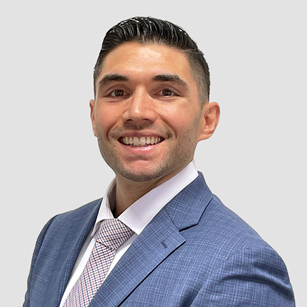
We're very pleased to have with us today Michael Vigorita from Qualified Member Expert Service Provider, S-E-A. Mr. Vigorita received his Bachelor of Science in Mechanical Engineering from Penn State University and his Master of Science in Systems Engineering from Stevens Institute of Technology.
As a mechanical engineer at S-E-A, Mr. Vigorita's responsibilities include investigation and evaluation of product performance, functionality, intended design, machine guarding, and compliance with applicable standards for personal injury or property damage matters.
Mr. Vigorita is experienced with reviewing and interpreting mechanical drawings, CAD models, product manuals, requirements, and specifications. Prior to joining SEA, Mr. Vigorita worked for Lockheed Martin on vertical launching system mechanical design requirements, qualification, and integration for domestic and international navies.
He is a member of the American Society of Mechanical Engineers, the American Society of Testing Materials, and is also certified through the National Association of Safety Professionals as a machine guarding specialist.
Michael, we're very pleased to have you with us today.
Michael Vigorita: Thank you very much. Very happy to be here.
John: Today's discussion with Michael is centered on engineering methods on product liability cases. So Michael, since I kicked off product liability, can you just tell our audience a little bit more about your experience and how that specifically applies to product liability?
Michael: Sure, yeah. So I came to S-E-A from the defense industry. There I designed, assembled, installed, and tested various mechanical assemblies. So things like electronics enclosures or large weldments, test equipment, tooling, and similar assemblies. And then my master’s work in systems engineering allowed me to operate within and also understand the full product life cycle outside of just designing and building a product.
So, think like cradle to grave from initial planning all the way through a product's life until it's fully retired. So that includes insulation, operation, and maintenance of the product. So adding that all together now as a licensed engineer focused in machine design, and as a certified machine guarding specialist, I'm able to understand how a product was designed, the math and science behind the product's functions, and then how that product should be deployed, safeguarded, and maintained once it's out in the field in use.
John: So Michael, when should someone seek out a mechanical engineering products expert like yourself?
Michael: I would say there are two situations where I'm typically contacted. The first is there was an incident with the product, and the client needs to answer either it’s the product's intended design, and or how it’s being used during that incident.
So being an expert in the design process and machine guarding allows me the ability to evaluate and provide inputs on the features, like I said, and functions or safeguards of a product and how that may have impacted what happened in the incident. So then similarly, my time spent managing overall product lifecycle means that I can review and evaluate the artifacts that are generated during the design.
So things like drawings, manuals, test results, they may or may not exist for the product that's at issue here. So I can review them, comment on the conditions of those artifacts and how their existence or non-existence could have affected the installation, operation, or maintenance of the product at the time leading up to, or even including the time of the incident. So the second situation would probably just add on to the first, but it's specifically when there's a potential or an alleged product defect claim.
So a product defect claim requires that you prove that there was a feasible, safer alternative design while you were designing the product, and that alternative wouldn't have impacted how you use the product or cause additional harm to the user or anybody else who may interact with it. So because of my experience, I'm able to answer those questions in how the design was generated in the 1st place, and then what documentation may or may not have been generated during that process that could provide insight into what was considered during the design process of that specific product, and how that would apply to the case.
John: So Michael, what is the most helpful when investigating a product liability case in particular?
Michael: So for me, what's most helpful in a situation where there's a reported incident with a product is to keep the site and especially the product itself in as close to the same condition as it was during or immediately following the incident so that I can get out there and I can document it in that condition.
So either tagging the product out or isolating it from similar products at the same site, and then making little to no change to the product allows for the most applicable data to be collected, and then ensures that data is the closest we can get to having been there for the incident. As an example, there was a case with a piece of material handling equipment that was being used. It was being used on an uneven surface, and it wound up tipping over, causing an injury.
Now, at face value, the reported use of the product was potentially in conflict with the product materials, and the photos of the equipment that we received prior to the exam showed no visible issue with the equipment. But thankfully, that piece of equipment was retained and isolated from use. And once we were able to get out there and examine it, turns out that there's a safety, anti-tip feature that was specifically missing from that piece of equipment in a location that supported the incident narrative that the equipment tipped in that direction. Now, as you can imagine, that's probably important information to know in a case like this, but without having the examination of that specific piece of equipment, that investigation would have relied on either documentation or individual's knowledge or some other data to try and determine the condition of the product at the time of the incident.
So while this all may have ultimately led to the same answer, it would have taken a lot more time, a lot more analysis, and would be subjected to a lot more scrutiny because there was no physical condition that was available for review. So isolating that piece of equipment Immediately following the incident was extremely helpful to completing a timely and accurate analysis. So let me give you another example, but instead now the site was maintained, and the failed product was still installed, so it couldn't be isolated. I worked on a case where there was a lift assembly that had failed while it was in operation. So we got photos, we got product materials to review prior to the examination.
However, it wasn't until we got there when we were looking at it and taking measurements that we noticed, and then were able to confirm, that the installation of that assembly made it so the lift point of where it was lifting was off centered to where it should have been per the drawings. Now, that wasn't visible or measurable without having been there to see him physically measure those features. So that off-center installation, like I said, would cause the lift to operate differently than was the intended design.
So being on site and being able to observe that and take those measurements is the difference between me saying in my analysis that the different operational condition is a possible thing that happened, versus me saying that it's probable that it was operating in a different loaded condition that was designed. And again, that was because the site itself was isolated. So those, again, just isolating the site or the product, very helpful in product liability analysis.
John: So Michael, what happens if the product had been replaced, fixed, or no longer exists? Are there still things that you can do to assist?
Michael: Of course there are, but sometimes, like I said earlier, it just takes a little bit more time to evaluate the different hypotheses that may come up. And that's totally fine. We do that all the time. And in the end, it doesn't diminish those results because it's all done scientifically.
I had a case, there was a bolted assembly that had fallen off a wall while someone was using it. The assembly had been fixed, and I was not able to go out there and do a site examination of the failed condition. I was provided photos, but they looked like they were taken with a flip phone, and I didn't really have much data to go off of on the site. But I did have all the product materials, I had drawings, I had models of the assembly.
So using that information, I was able to calculate the typical loaded condition of the assembly on the wall, the forces that would have been acting on it at the time of the incident, assuming, of course, that it was installed per the product materials. And so that data point allows me to do 2 things: firstly, evaluate the intended design. And then secondly, I can generate hypotheses on how the installation might have changed that could result in that assembly falling off the wall.
So that analysis provides me with insights into what could have occurred during the incident without even being on site to see the failed product. And then here's another example. I like these examples because they're all using calculations. So we've all seen umbrellas rolling down the beach on a windy day, right? Well, we had a case, it wasn't on a beach, but there was an umbrella that was picked up by the wind, and it struck somebody. Now, obviously the umbrella was picked up and moved.
So the installation right before the incident, we can't examine that. However, we can take a look at it afterwards and that can provide us with data so then I can calculate the most likely installation prior to the incident. The dimensions, the materials, the weights of everything that's involved can be documented and can tell me what are the forces that are required to pull that umbrella up out of the stand it was installed in.
We can compare that to weather data on the day in question to figure out what installations could have allowed this incident to occur. Like, was it even possible to have occurred if it was installed in a particular way? Does the umbrella poll have any evidence of failure that could provide insight into how it's separated?
Those are all questions that can be answered without having direct knowledge of the installed condition. but rather, like I said, with just design conditions, material properties, and scientific calculations, all done after the fact.
John: Okay, so let's take it a step further and say the case doesn't start until years later, and there's little or no information about the site, and the failed product is no longer available. What options are there for analysis to exist?
Michael: Now again, that's also very common and we do that also, all the time. So it's not an issue on being able to do things. One option is testing exemplars of the failed product. An exemplar is the same make, model, type of product that had failed. So it should be fully representative from a form, fit, and function replacement of that failed product to be tested. And then product materials for these products typically include specifications that outline design or testing standards.
So we can take those testing standards, and we can validate that the design itself satisfies or exceeds the design requirements that are specified. For example, say there's a product defect claim on a chair. So the Business Institutional Furniture Manufacturers Association, or BIFMA, recommends specific test procedures to conduct on chairs that they need to pass in order to pass from a loading and operating capacity perspective so they can be sold to the public.
So I can take a set of exemplar chairs, which again aren't the ones that actually failed, and test them to a standard to make an opinion on the general overall design of the chairs. This could provide me the data to say that the chair that failed is probably a singular defect or a use case isolated to that specific failed chair versus being an inherent design defect in the chairs overall. So at S-E-A, my colleagues and I have all written and conducted test procedures in our labs using ASTM, ASHRAE, other standards and specifications. We use those test results in a lot of different ways, so we've done things like testing to confirm or refute a product’s marketing performance.
We've also used it to conduct tests to compare or validate the third-party testing that's done during the product development process. Or we can simply run a test that outlines the operational parameters of a product and gives us the general idea on how that product works. So those tests completed on exemplar products, again, not the failed product, in a standardized environment in our labs can still provide useful data in understanding the possibilities that exist for why a specific product had failed.
John: Michael, does your analysis ever call for testing that doesn't conform to a specific standard?
Michael: Yeah, absolutely. That's sometimes the most fun part of my job. We can try and set up tests in a scenario that recreates specific conditions. And that can be very helpful in our product liability analysis. So it can show me exactly what items in the product need to be either modified or removed or even overridden to create the reported scenario that's being alleged in the incident. So the most important thing about testing in that case would be to fully document it so that it's observable and repeatable, because that's what you need to run a scientific analysis.
So as an example, we had a claim where there was somebody who was burned with flames allegedly shot out of a portable stove. So in the safety of our lab, we were able to test the stove's conditions, burner settings, and then durations the knobs were open, and that would try and answer for us what, if anything, could cause flames to, quote, shoot out of the stove. And so even if we can't recreate the condition or the failure during those tests, that data is still very useful and can be used many different ways in the analysis. We can also do, like simple non-standard tests in the lab to attain the component properties to exist in those analyses.
So just because something is non-standard when I say it doesn't mean it's not scientific, but rather it just doesn't meet a specific standard, like an ASTM standard or something like that. And so if I reference back to my example about that bolted wall assembly that fell, I was able to use the models and the specifications that are available to determine how that assembly was loaded on the wall. But what I really needed was just the weight in the center of gravity of the assembly to do those calculations.
So in the case that I can't find that model on the internet or through the product specifications, I have in the past taken an exemplar product into a lab. I can weigh it. I can use multiple scales in various orientations to determine where the center of gravity on that piece of equipment is. And then with those physical measurements taken, those calculations that I talked about, can all be previously completed, and in this case, would have been without the design materials. So that's still very helpful.
And so bottom line is, I find that a lab type interaction, non-standard or otherwise, with an exemplar type product is extremely helpful during forensic investigations. And then in my experience, it provides me with the most comprehensive way I can think of to understand the functions of a product, how someone would interact with it, and that's invaluable when you're doing these types of analyses.
John: Michael, this was a terrific discussion on product liability cases. So what is the final takeaway you would like our listeners to have from our discussion today?
Michael: I think I would just end by saying there's so many different products out there, and that means there are equally just as many standards or specifications or tests that exist that people may not even be aware of. Not to mention all the math and science that goes into the design of a product itself. It can be challenging to understand. So if someone wanted to spitball ideas on how to evaluate an incident, a product defect claim, or even a previous case, I'd offer myself up as a resource to have those conversations.
It's my job to know how a product could be evaluated, and then also the pros and cons of that evaluation and the analysis. And so if I can wind up doing a calculation or a simulation, or like I said, even best-case scenario, a test, to evaluate that situation in a scientific way, I'm a happy guy, and that's kind of my perfect day at work. So I'd like to thank you and the listeners for this opportunity, and I'm just looking forward to any conversations that may stem from this in the future.
John: Michael, terrific job. Thanks so much for joining us today.
Michael: Thank you very much.
John: You just listened to Michael Vigorita from qualified member expert service provider, S-E-A, and special thanks to today's producer, Frank Vowinkle. And thank you all for joining us for “Best's Insurance Law Podcast.” To subscribe to this audio program, go to our webpage, www.ambest.com/professionalresources. If you have any suggestions for a future topic regarding an insurance law case or issue, please email us at lawpodcast@ambest.com.
I'm John Czuba, and now this message.
Transcription by CastingWords
Copyright © 2026 A.M. Best Company, Inc. and/or its affiliates. All rights reserved. No portion of the content may be reproduced, distributed, or stored in a database or retrieval system, or transmitted, or uploaded into any external applications, algorithms, bots or websites, including those using artificial intelligence or machine learning technologies such as large language models (LLM), generative AI (Gen-AI)or retrieval-augmented generation (RAG) in any form or by any means without the prior written permission of AM Best. AM Best does not warrant the accuracy, completeness, or timeliness of the AM Best content. While the content was obtained from sources believed to be reliable, its accuracy is not guaranteed. You specifically acknowledge that neither AM Best nor the content gives any investment, financial, tax, insurance, or legal advice. You are solely responsible for seeking competent professional advice before making any investment, financial, tax or insurance decision. For additional details, refer to our Terms of Use available at the AM Best website: https://web.ambest.com/about/terms-of-use.